The numbers are on your side. In the largest survey of lost pets in the United States, 93 percent of dogs that went missing were back with their families, and most of them within two days. Seven in ten were found less than a mile from home. Half were found by someone physically searching the neighbourhood, and only one in five walked home by itself.
That last figure is the point of this guide. Waiting at the door works for one dog in five. The rest are found by people: a neighbour who checks her garage, a driver who saw a bright orange sign, a shelter worker who scans a chip. Your job is not really to find the dog. It is to find the person who has seen it, and to make sure that when the dog is finally in front of someone, they do the right thing. This guide gathers what the missing-animal researchers, the volunteer lost-dog networks and the big charities have learned, in the order you need it.
The short version: what to do right now
- Check the house, garden, garage and shed. Make sure the dog is actually gone and nobody in the family let it out or has it.
- Establish where and when it was last seen, and which way it went. Ask straight away for doorbell camera footage from that street.
- If your dog is friendly and has only just gone, walk the area calling cheerfully with treats and the lead. If your dog is nervous, or has been gone more than a few hours, stop calling and read the section on survival mode first.
- Leave a scent anchor at the spot it left from: your worn clothing, its bed, a crate with the door open, food and water.
- Phone the microchip database, animal control or the council dog warden, every shelter and every vet in the area. Today, not tomorrow.
- Put big fluorescent posters at the road junctions around the area, and flyers through the doors of the nearest streets.
- Reach the people who live around the spot your dog vanished, not just the people who follow you online.
- Set up a feeding station with a wildlife camera by the first night, especially for a shy dog. Do not chase, ever.
First, check the dog is really lost
The Missing Animal Response Network puts "wait and see" at the top of its list of owner mistakes, and most lost dogs are found within the first few hours when the owner acts immediately. But spend the first ten minutes at home. Dogs get shut in bedrooms, fall asleep behind sofas, get stuck under decking and wedge themselves behind the shed. Check the gate is latched, and phone anyone who might have taken the dog out.
Then fix the facts: the exact spot, the time, the direction of travel, and what the dog was wearing. Everything else radiates from that point. Knock on the doors nearest to it and ask for doorbell and security camera footage from the last hour; a direction of travel at minute one is worth more than a hundred flyers on day three.
How far do lost dogs go?
Less far than fear tells you. In an Ohio study, 71 percent of recovered dogs were found within a mile of home, and only 7 percent had gone more than five miles. Listings data from 2024 puts around 40 percent within a couple of hundred metres. But the average hides two very different dogs, and the missing-animal researchers sort them by temperament:
- Gregarious dogs go up to the first person they meet, wagging. They are usually picked up within a few blocks, and end up in someone's kitchen, at a vet or at a shelter within a day. Your search is mostly phone calls and posters.
- Aloof dogs are wary of strangers, accept people slowly, and travel further. They are often recovered weeks later by a patient volunteer, thin and scratched, a few miles from home.
- Fearful dogs, including many rescues and dogs with a puppy-farm start, bolt and keep going, and will run from their own owners. Volunteer networks treat these as a five-to-ten-mile radius from day one, and every flyer carries "do not chase".
Small, elderly and disabled dogs rarely get further than a few streets, and small or pretty dogs are the most likely to be picked up and driven somewhere. Fit large dogs, and huskies and collies in particular, can cover five miles in a day. The weather matters too: cold, deep snow and heavy rain shorten every distance, and a dog lost from a car accident that is not pursued usually stays within half a mile.
Survival mode: why your dog will run from you
This is the section to read before you do anything else, because it is the part that goes against every instinct you have. A dog that has been frightened, or has simply been loose for a day or two, slides into what the lost-dog networks call survival mode. Stress hormones flood the brain, priorities reorder to predators, shelter, water, food, and every human becomes a threat. That includes you. Dogs in this state have run from the owners they sleep on every night. It is not about love, and it is not permanent, but while it lasts your voice, your outstretched hand and your running footsteps all read as danger.
Two consequences. First, never chase. The Missing Animal Response Network's definition is strict: any forward movement towards the dog is chasing. The three commonest ways lost dogs die are cars, trains and thin ice, and vehicle strikes happen most often while someone is running after or calling a dog. Second, stop calling its name once it has entered flight mode. The trackers at Three Retrievers, who have worked thousands of cases, reckon calling makes things worse about three times in four. A dog that has been called and grabbed at unsuccessfully learns that your voice means capture.
The exception is the first few minutes with a confident, sociable dog that has just slipped out. Then a cheerful "treat!" or "walkies!" and a rattled biscuit tin are exactly right. The moment the dog looks at you and moves away instead of towards you, switch to luring.
The first hour: search close, and leave a scent anchor
- Walk or slowly drive loops of about half a mile around the escape point, checking the cover a frightened dog uses: under decking and sheds, hedges, garages, building sites, fenced gardens it may have got into and cannot get out of.
- Bring the lead, the smelliest treats in the house, a squeaky toy and a recent photo on your phone. If you have a second dog the missing one likes, bring it. Leave the crowd at home.
- Drive with the hazard lights on and a LOST DOG sign in the window. A window marker on the rear glass, three huge lines, works well: LOST BLACK LAB, the street, your number.
- At the spot the dog left from, put down something that smells of you and of home: a worn jumper, its bed or blanket, a crate with the door propped open, a bowl of water and some strong-smelling food. Dogs often circle back to the place they lost you.
- If you are at home, leave the garage or a side door cracked open with a blanket inside, and keep a lead by the door.
The first day: tell everyone who could have your dog
The volunteer networks say the same thing in every case: the records do not talk to each other. A dog handed to a vet is not on the shelter's list. The council's dog warden does not tell the rescue two miles away. The finder who posted on a Facebook group you are not in will assume the dog was dumped. You have to reach all of them yourself, and repeat it.
- Phone the microchip database, confirm your details are current, and flag the dog as missing. A chip is useless if the phone number on it is three moves old, and only around six in ten chips are registered at all.
- In the UK, the council dog warden is legally responsible for stray dogs. Find yours through the council website and report the dog on the first day; strays are held for seven days (five in Northern Ireland) before they can be rehomed, and there is a statutory fee plus kennelling to reclaim. In the US, phone animal control, the municipal pound, the humane society and the SPCA separately; hold periods run from 48 hours to ten days depending on the state, and are usually about three days for a dog with no ID.
- Phone every vet and emergency clinic within a few miles. Finders take injured and friendly dogs to vets, where they are scanned.
- File a report with every shelter and rescue within about 25 miles, because finders drive dogs a long way. Ask what their hold period is and how to see the found-dog log.
- Tell the postie, delivery drivers, refuse crews, school bus drivers, dog walkers and children on the nearest streets. Children spot dogs adults walk past.
- Knock on doors within several blocks and ask people to check their garages, sheds, under their decking and inside fenced gardens. Frightened dogs get stuck in places their owners never think of, and stay silent there for days.
Posters that stop cars, flyers that go through doors
Ask the lost-dog networks how most dogs are actually recovered and the answer is unglamorous: somebody who saw or knew something saw a sign. The Missing Animal Response Network recorded 14 of 43 families it coached recovering their dog directly through what it calls intersection alerts. The method is simple and physical.
- Make ten to twenty giant posters on fluorescent orange or yellow card, around 70 by 55 centimetres. Black letters at least 12 centimetres tall: LOST DOG at the top, a huge photo in a clear sleeve in the middle, five words at most (RED SETTER, FRIENDLY, DO NOT CHASE), and your phone number in letters you can read from a car.
- A driver has five seconds and reads five words. Anything more is invisible.
- Put them at every junction with a stop sign or traffic light within two to five miles of the escape point, on stakes or frames, angled to the traffic, and at any place the dog is sighted. Keep them up for a month and replace the faded ones.
- Separately, print A4 flyers with the photo, the breed, colour, size, sex, whether it wore a collar, the date and exact place, one phone number, and a clear instruction: do not chase, phone me with sightings. Push them through every door within a half-mile and leave stacks at vets, pet shops, launderettes, petrol stations, cafes, schools and dog parks, at a child's eye level.
- Leave one identifying detail off every poster and post, so you can check callers who claim to have found the dog.
- Record a voicemail message asking callers to leave the time, the place, the direction the dog was heading and their number.
The poster wording and layout that people actually read is covered step by step in our guide to making a lost pet poster that gets results.
Reach the people who live where your dog is, not the people who know you
Post in the local lost-and-found dog groups on Facebook, on Nextdoor and on the lost pet registries (Petco Love Lost and PawBoost in the US, DogLost and Animal Search UK in Britain), with several photos, the exact place and date, and "do not chase". Ask on the Ring Neighbours app for footage. Then keep the posts updated with confirmed sightings, but never with the dog's exact current position, because a crowd converging on a frightened dog sends it five miles further away.
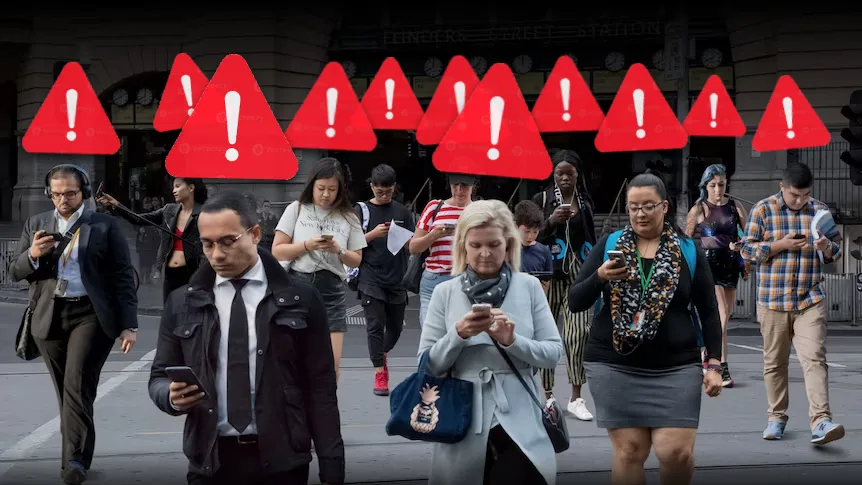
Understand what a post does, though. It reaches the people who follow you, wherever they live, and it travels only as far as people share it. The person who will find your dog lives within a mile of the spot it vanished and has never heard of you. An alert that reaches people because of where they live, rather than who they know, is a different tool from a post, and for a dog on the move it is the one that matters.
That is what a Lost Pet Alarm is for: create an alarm for your dog and choose a radius around the last place it was seen, and the alert is delivered to the people inside it.
There is a full walkthrough of the groups and apps worth your time in our guide to using social media to find a missing pet.
If you see your dog: the calming approach
When a sighting comes in, or the dog appears at the end of the garden, everything depends on the next thirty seconds. The approach the volunteer networks teach is borrowed from how dogs calm each other, and it feels wrong to a worried human. Practise it in your head before you need it.
- Stop. Turn side-on. Sit down on the ground with your legs out, or lie down. Do not crouch or kneel, which looks like a pounce.
- No eye contact. Yawn, lick your lips, look away. Talk softly or not at all.
- Pretend to eat something, and "accidentally" drop pieces. Toss treats to the side of the dog, never at it. Roast chicken, hot dogs and cheese work better than kibble.
- Let the dog come to you and touch you several times before you reach for it. When you do, bring the lead slowly from below and let it sniff the lead first. Never reach over the head.
- Or walk away. Many dogs that will not be approached will follow a person who is leaving, especially into an open car door. Pull ahead, open the rear door, sit still and use the usual "in you get".
- If the dog moves off, let it. It has now been seen, it is alive, and you know where to put the feeding station.
A search party is the wrong shape for a frightened dog. Groups of people crashing through woods, quad bikes and drones push a panicked dog out of the area. Keep teams of two, work the edges, and search no more than a few metres into woodland, at midday. Lure the dog out; do not go in after it.
Feeding station and wildlife camera: your best tool for a shy dog
A dog that is not being pressured keeps its judgement and settles. It turns largely nocturnal and stays near a reliable source of food. That is bad news for a search and very good news for a feeding station, which lets the dog come to you on its own terms and tells you, on camera, that it is alive. Volunteer networks put one out on the first night for any shy dog.
- At the escape point, or the nearest safe place to a sighting, put down a pile of strong-smelling food (tinned cat food, hot dogs, deboned roast chicken, bacon, tinned dog food in gravy) and a bowl of water, next to a worn item of your clothing. Drizzle the ground with meat juice or barbecue sauce so the scent lasts even if a fox eats the food.
- Point a wildlife camera at it, mounted low and a couple of metres away, far enough to see which direction the dog arrives from and leaves in. No camera? Sprinkle flour or fine sand around the bowls, or lay a damp towel, and read the prints in the morning.
- Check it every morning. If the dog is eating, keep feeding at the same time, in the same place, and do not rush out when you see it on the screen. A dog that has found food somewhere once will come back.
- Cooking bacon or sausages on a portable grill near the area throws a scent cloud a hungry dog can pick up a long way off.
A magnet dog
If your dog is repeatedly seen in one area but runs from everyone, a calm, steady dog it knows and likes, on a long line of ten metres or so, can do what no human can. The handler ignores the lost dog completely and fusses over the magnet dog with treats and praise. Curiosity and sociability pull the lost dog in. It does not suit a dog that is aggressive with other dogs, but it has brought home dogs that had been loose for weeks.
The humane trap: one chance, so go slowly
Set a trap only when the camera shows the dog eating in one specific place at a predictable time. Set too early, and the dog has a bad experience and never enters one again. The lost-dog networks call the method "go slow to go fast".
- Borrow or hire the right size of trap from animal control, a rescue or a shelter. Too small and the dog will not go in, too big and its weight will not trip it.
- Put the trap a few metres from the feeding station, tied open, and let it sit for several days until it is part of the scenery. Move the food closer each night: beside it, under the door, just inside, then behind the trip plate.
- Set it only during the dog's feeding time, and never leave it set unwatched. Check every hour, or watch it on a wireless camera, and get the dog out within half an hour. Tie it open overnight if nobody can watch.
- Do not open the trap in the field. Carry the whole thing to the car and open it indoors with the doors shut. Wear gloves: a dog in survival mode may not know you yet.
- A dog that visits the house but bolts from people can be caught with the house itself: door open, food inside, a string on the door.
Days 2 to 7: widen the circle and visit the shelters in person
- Extend the flyer radius by about a mile a day, following the sightings. Map every sighting with the time and direction; dogs follow corridors such as railway lines, streams, footpaths and fence lines.
- Visit each shelter and pound in person every day or two. Shift staff change, descriptions get logged wrong, and a black "Labrador cross" on the phone may be your brindle lurcher in the third cage. Ask to see the found-dog log and the record of dogs found dead on roads. Check their online listings and the neighbouring county too.
- Repeat the door-to-door canvass. Ask again about camera footage. Talk to staff at takeaways and petrol stations on different shifts, and check building sites and bins where a hungry dog scavenges.
- Refresh the online posts every few days with new wording and photos.
- Consider a scent-trailing dog if you can find a reputable one quickly. Their value falls fast with time: roughly even odds of a find at 24 hours, one in four at 48 hours, almost none after two weeks. Two thirds of searches at least give a direction of travel. Cool, damp weather helps; a contaminated scent article ruins it.
Week two and beyond
A dog that has settled can survive for weeks, even months, provided nobody chases it. From here the search is a routine, not an emergency: keep the feeding station fed and the camera checked, keep the neon posters fresh, keep the shelter visits weekly and the online listings renewed, and act on every sighting within the hour. Dogs have been recovered after forty days, after three weeks and sixteen miles, and after more than a year. Volunteer networks give one rule for stopping: not until you have physical proof. Predators account for a very small share of lost-dog deaths, and "went off to die" is a story people tell themselves to end a search.
Professional help is available, from technicians trained by the Missing Animal Response Network to thermal drone operators. Drones work over open ground and are counterproductive in woodland with a panicked dog. Be wary of anyone who asks for money before doing anything, and of psychics, urine-trail kits and unlicensed "pet detectives".
Special cases
A dog that bolted at fireworks or thunder
July is the peak month for lost dogs, and reports jump by around a third around the fourth of July; New Year's Eve and Bonfire Night do the same. A dog that bolts from noise usually runs hard, then hides, often for hours or days, and comes out after dark when hungry. The hiding is safe: it keeps the dog off the roads. Do not flush it. Put out a blanket, food, water and worn clothing, flyer the neighbours so nobody chases, put neon posters in a wide ring because a panicked dog can go far, and wait for the sighting before you lure.
A newly adopted or rescue dog
Escapes peak in the first 48 hours after adoption, and a rescue dog does not yet know that you are home. Treat it as a fearful dog from the first minute: no calling, no chasing, a feeding station on night one, "do not chase" on every flyer, and plan for a magnet dog or a trap rather than a joyful reunion in the park. Tell the rescue immediately; they know the dog's history and often have volunteers and equipment.
Lost while travelling or on holiday
Dogs often head back to the car or the place you were staying rather than deeper into strange country, so anchor your scent there first. Tell the hotel, campsite or park rangers, flyer the trailheads, and report to the local animal control, dog warden, vets and emergency clinics. Before you have to leave, hand the feeding station and the shelter checks to someone local, such as a rescue volunteer or the campsite owner, and keep the listings live with your mobile number.
A senior, deaf or blind dog
Old dogs with dementia wait at the wrong side of doors, cannot navigate familiar streets and do not recognise traffic. They take the easiest path, which is downhill and towards water. Search ditches, ponds, streams, window wells, tall grass, under vehicles and in sheds a few houses away, quietly, from the water back towards home, and leave the garage cracked open with a blanket. A deaf dog cannot be called, so scent and sight are the only channels: worn clothing, food, and a torch at night to catch the reflection of its eyes.
Stolen, or lost?
Almost always lost. Treat it as lost unless you saw it taken. If you do suspect theft, report it to the police and get a crime number, but keep the word "stolen" and any reward figure off your posters: both attract the wrong kind of caller, and a reward encourages people to chase.
Scams, and staying safe
Expect messages saying "I have your dog" followed by a request for a verification code, a deposit or a courier fee. Never send money or read out a code. Ask for the detail you left off the poster and for a photo of the dog next to something dated. Meet in a public place with someone else, do not carry cash, and involve the police in any handover that involves a claimed theft. Most reunions happen without any reward at all; if you want to thank a finder, do it afterwards.
When your dog is home
- Greet warmly, whatever the last week cost you. A scolded dog learns that coming back is bad.
- Book a vet check: dehydration, cut pads, ticks, and anything eaten on the way. A dog that has gone days without food should be fed small meals to begin with.
- Take the posters down, close the posts, tell the shelters, the warden and the vets, and thank the neighbours. They will search for the next one.
How to stop it happening again
- Microchip, register the chip, and keep it current. Chipped dogs are about three times as likely to be reunited, and a chip plus a tag beats a chip alone. Put two phone numbers on the tag.
- Audit the fence and the gate, and make sure everyone in the house closes doors on firework nights and during parties.
- For a new rescue dog: a lead trailing indoors for the first days, two points of attachment on walks, and no unattended garden time until it knows you.
- Teach an emergency recall to a whistle or a specific word that always means the best treat in the house.
- Keep a sharp, recent photo showing size and markings. Note your local shelters' phone numbers and hold periods now, before you need them.
- Consider a GPS collar for a dog that runs, and a calming wrap or a quiet room for a dog that panics at noise.
Frequently asked questions
What are the chances of finding a lost dog?
High. A large US survey found 93 percent of lost dogs were recovered, and an Ohio study found 71 percent, with most home within two days. Half were found by people searching the neighbourhood, and about a fifth came home on their own.
How far do lost dogs travel?
Usually less than a mile: about 70 percent of recovered dogs were found within a mile of home and only 7 percent beyond five miles. Small, old and friendly dogs stay closest. Fearful dogs and fit large breeds can cover five to ten miles.
Will my lost dog come back on its own?
About one in five does, usually within a day and usually to the spot it left from, so leave a scent anchor and food there. The other four in five are found by people, which is why posters, flyers and local alerts matter more than waiting.
Why does my dog run away from me when it is lost?
After a fright or a day or two loose, a dog enters survival mode: stress hormones suppress recognition and every person reads as a threat, including its owner. It is not about love and it passes, but while it lasts you must lure rather than approach.
Should I call my dog's name when it is lost?
Only in the first minutes with a confident, friendly dog. Once a dog has bolted or looks away from you, calling and whistling push it further off. Sit sideways, avoid eye contact, drop food, or walk away and let it follow.
How do you catch a scared lost dog?
Never chase. Use calming signals (side-on, seated, no eye contact, tossed treats), then a feeding station with a wildlife camera, then a calm magnet dog on a long line, and finally a humane trap once the dog is eating in one place at a predictable time.
What should I do in the first 24 hours after losing my dog?
Search the house and a half-mile radius, leave your scent and food at the escape point, report to the microchip database, animal control or the dog warden, every shelter and vet, post in local groups and alert the neighbourhood, put up neon posters at junctions, and set a feeding station with a camera by nightfall.
How long will a shelter keep a lost dog?
In the UK the council holds strays for seven days (five in Northern Ireland). In the US it depends on the state, from 48 hours to ten days, and is typically about three days for a dog without ID. Visit in person and check every cage.
How long can a lost dog survive?
Days without water, longer with it, and a dog that has settled near a food source can survive weeks or months. Dogs have been recovered after forty days, after several weeks and many miles, and after more than a year.
Does a microchip help find a lost dog?
A microchip has no location function; it identifies the dog when a vet, shelter or warden scans it. It helps enormously, but only if it is registered and the phone number is current, and around four in ten chips are not registered at all.
Should I offer a reward for my lost dog?
Most lost-dog organisations advise against a stated reward: it invites chasing, scammers and even theft, and most reunions happen without one. If you use the word, leave out the amount, and thank the finder afterwards.
When should I stop looking for a lost dog?
Not until you have physical proof. Keep posters up for a month, check shelters weekly, renew online listings and keep the feeding station running. Predators account for a very small share of losses, and long searches succeed.
If your dog has been gone less than a day, work through our checklist for the first 24 hours alongside this guide, and keep checking the shelters every day until your dog is home.